VC Valuation
-

When we described the use of the VC method by venture funds to make investment decisions in a startup, the model was solely about the investment decision (VC Method). The next stage involves deciding in what format the investment will be made—whether it will be preferred shares, convertible preferred shares, or something else. When we…
-

Key Considerations When Comparing Metrics for Startup Exit Valuation Important Factors to Consider When Comparing Metrics for Startup Exit Valuation with Similar Companies: EV/Revenue = margin * (1-tax rate) * (1-IR) / (WACC – ROIC * IR) Source:Venture Capital & the Finance of Innovationby Andrew Metrick & Ayako Yasuda, Second Edition
-
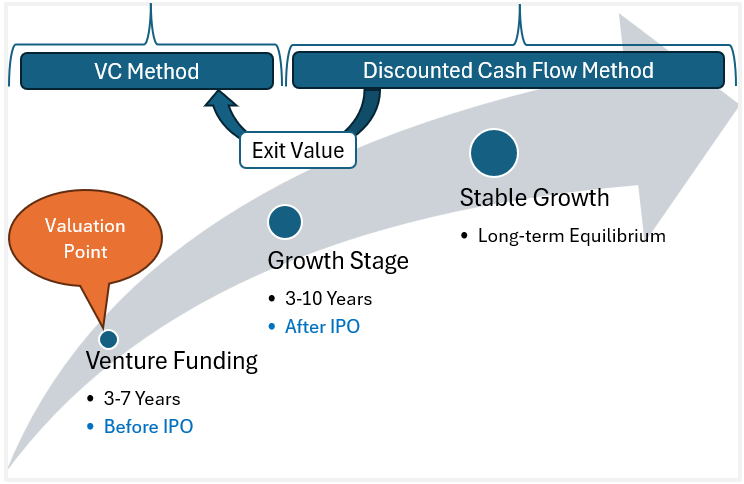
The use of the Venture Capital (VC) method for valuing an organization begins with determining the Exit Valuation, i.e., the value that the organization is expected to have when the fund successfully exits (either through an IPO or a sale to a PE fund). There are two approaches here: using the multiples method (comparative) or…
-

When discussing the evaluation of startups using the #VC method, one interesting point comes to mind: As I mentioned earlier, investment funds should provide an answer to the question of what happens to a startup when the fund exits? In the previous discussion, I mentioned that during evaluation, investors mainly rely on statistics of analogous…
-

VC Method There is a startup valuation method called the VC (Venture Capital) method, which differs from the DCF method for mature companies, as cash flows in startups are less predictable. Consequently, the methodology is technically simpler. The indicators used by venture funds to make investment decisions are more intuitive than scientific, and thus largely…
-
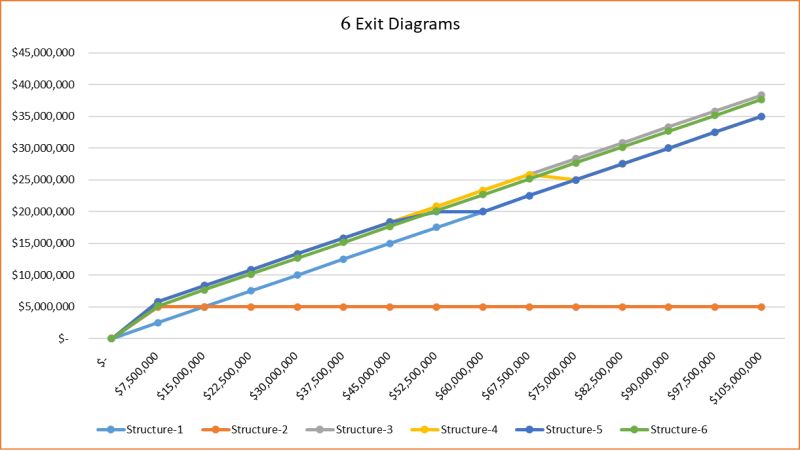
Venture capital funds primarily use preferred shares (redeemable, convertible, mandatorily convertible, automatically convertible, etc.) to finance startups. Based on the details of the agreement, exit diagrams are created, which show how profits/assets are divided in the event of liquidation or the fund’s exit. For example, the diagram below shows a simple exit diagram for convertible…
-

One of the critical concerns for VC funds is the issue of self-dealing. An index describes how this problem is addressed legally across different countries. Self-dealing, Tunneling, and Investor Expropriation Self-dealing occurs when the management or majority shareholders of an organization direct resources towards themselves in a manner that does not fairly compensate minority shareholders.…