Real Estate Investments
-
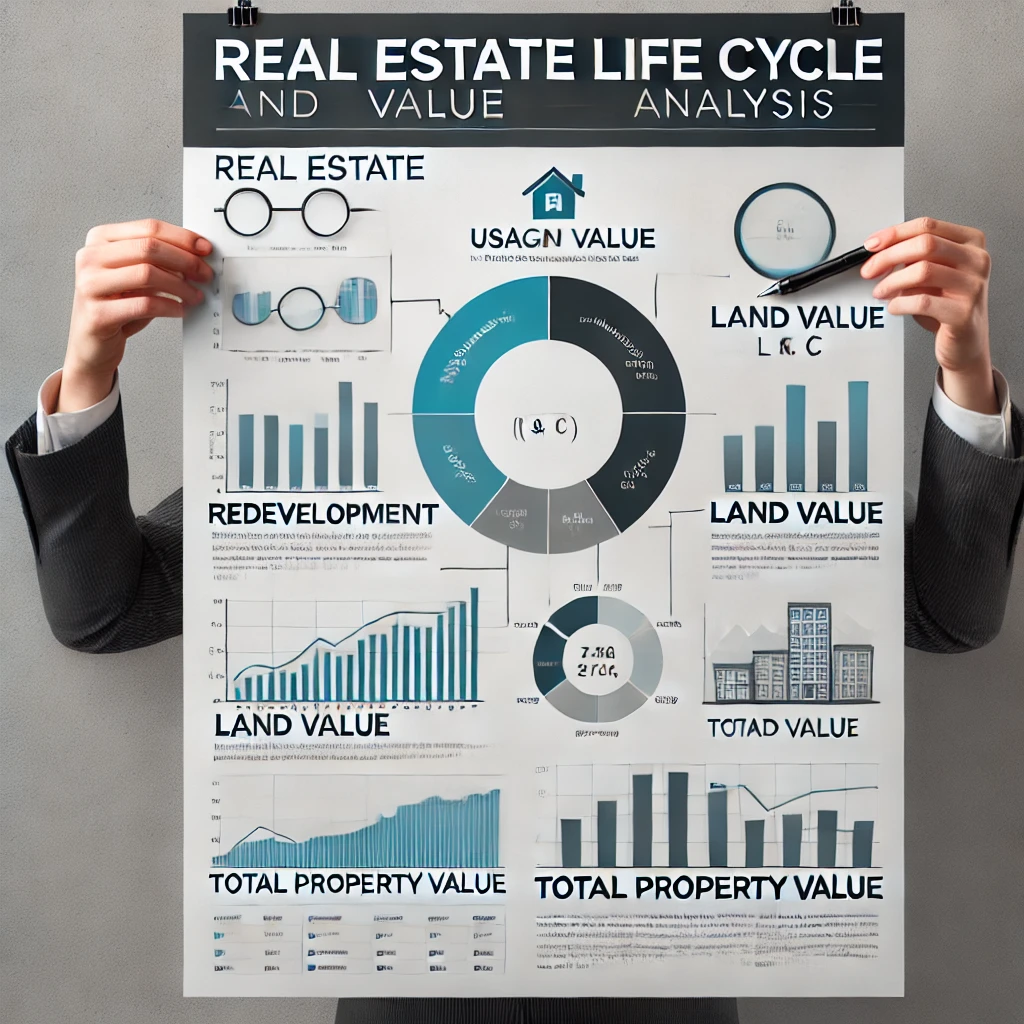
A property has a life cycle—it is created, ages, depreciates, and is eventually redeveloped. Because of this, investors view real estate as comprising two parts: land value and building value. This type of analysis provides significant insights into evaluating property value and rent growth rates. Let me explain this intriguing diagram: Key Findings from This…
-
Urban land use and density are shaped by economic principles and social factors. The classical monocentric city model provides a foundation for understanding urban spatial economics, but real-world cities exhibit more complexity, reflected in two key models: Both models highlight how land markets balance transportation costs, density, and preferences to maximize productivity, shaping the unique…
-

When we discussed the monocentric city model, we described the value of real estate in terms of rents rather than prices. While rent levels are directly related to real estate prices, two additional factors influence prices beyond current rents: the rate of rent growth and the level of uncertainty (to fully understand this concept, familiarity…
-

The monocentric city model, despite its simplicity, provides fascinating insights into how cities form and what factors influence real estate prices, such as location, spatial growth, population growth, and more. Model Assumptions: Rent Decomposition: In the model, any real estate rent is divided into three components: Example Geometry: Given these parameters: The location rent is…
-

The demand for construction land is derived demand, not direct demand. Land serves as a production factor—it is not needed for final consumption but rather for hosting buildings and equipment that produce goods for final consumption. Unlike other production factors, land is immobile. Any other factor, be it labor or construction materials, can be moved…
-
Rank-Size Rule (also known as Zipf’s Law) states that a city’s population size tends to be proportional to the largest city’s population divided by the city’s rank (its position in population size hierarchy). Mathematically:City Population = Largest City’s Population / Rank of City For instance, if the largest city in a country or region has…
-
The Four Quadrants Diagram illustrates the system of forces in the real estate sector. The interaction between the development sector, the capital market, and the space market creates a long-term equilibrium. Source: Commercial Real Estate Analysis and Investments by D. M. Geltner, N. G. Miller, J. Clayton, and P. Eichholtz. This model effectively explains market…